Volcanology of the Krafla Fissure Swarm
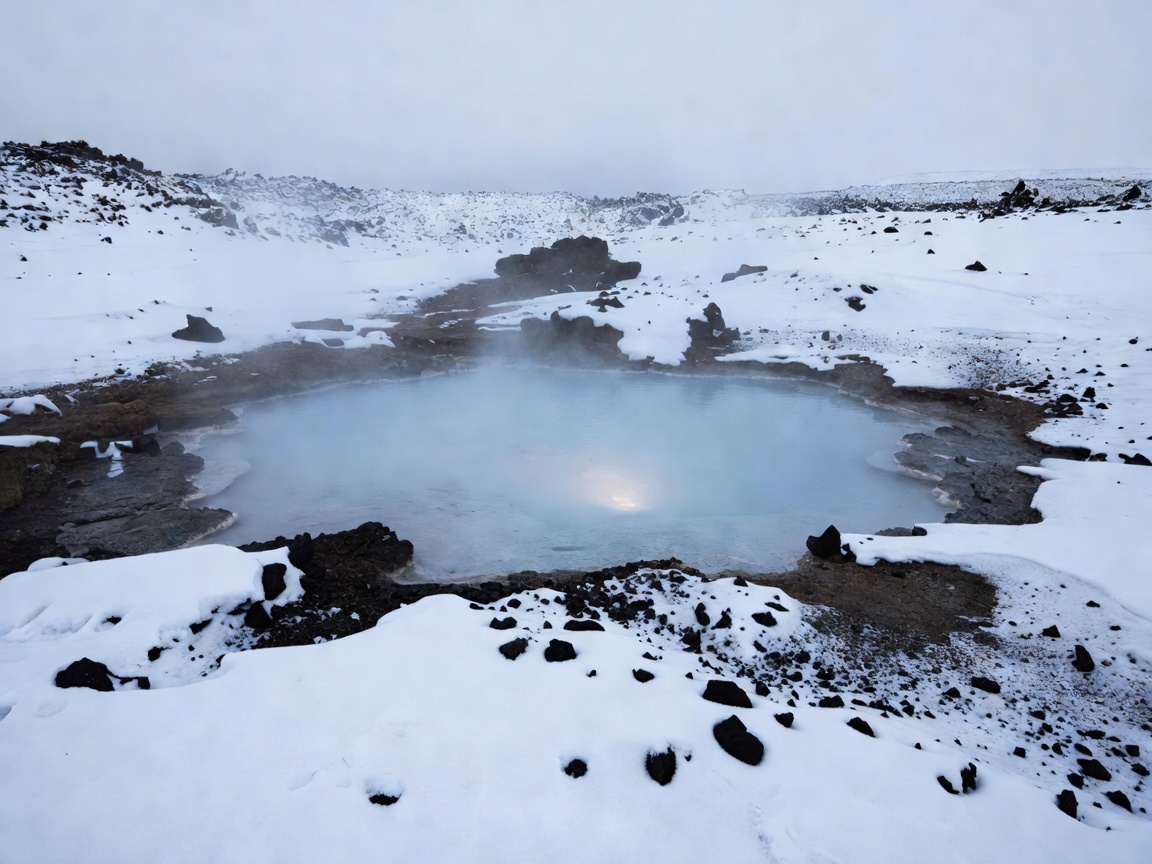
Jarðböðin við Mývatn (The Mývatn Nature Baths) lies in the volcanic heart of northeastern Iceland, an otherworldly landscape shaped by repeated tectonic rifting. Situated roughly 105 kilometers south of the Arctic Circle, the baths overlook Lake Mývatn and the surrounding volcanic terrain of pseudocraters, cinder cones, and steaming sulfur vents.
The water supply is linked directly to the Krafla volcanic system and the nearby Bjarnarflag geothermal power plant. Deep boreholes tap boiling hydrothermal fluid at depths of roughly 2,500 meters. This pressurized subterranean reservoir reaches temperatures of up to 130°C before entering a surface cooling basin, which tempers the flow to an inviting 36°C to 41°C. The water is then piped into a stepped two-tier lagoon holding approximately 3.5 million liters of thermal water.
Sulfur Chemistry & Microbiological Defense
The chemical profile of Mývatn's waters sets it apart from southwestern Icelandic lagoons. While it contains high levels of dissolved silica, its defining characteristic is a rich concentration of sulfur compounds, particularly dissolved hydrogen sulfide ($H_2S$).
This mineral balance makes the water slightly basic and alkaline, with a measured pH hovering between 8.5 and 9.0. This natural alkalinity, combined with the presence of sulfur, acts as a potent natural biocide: bacteria, undesirable microbes, and aquatic algae cannot survive in this environment. As a result, the entire 3,500-square-meter lagoon maintains pristine water quality without requiring any chemical chlorination or synthetic disinfectants.
Sulfur Volatilization Advisory: The distinctive "rotten-egg" sulfur scent is noticeably stronger at Mývatn than at southern coastal pools. Silver jewelry, brass, and gold watches will quickly react with the airborne hydrogen sulfide gas, leading to instant oxidation and dark tarnishing. Leave all jewelry in locker room safes.
Comparative Evaluation: Northern Isolation vs. Southern Spas
For Ring Road travelers deciding whether to include Jarðböðin in their itinerary, consider these comparative trade-offs:
Key Merits
- Wild Arctic Setting: Looking out over Mount Námafjall and the Hverir solfatara fields provides an untamed, starkly volcanic panorama that feels worlds away from suburban capital-area spas.
- Natural Subterranean Steam Baths: The facility includes two steam huts built directly on top of active geothermal fissures. Pure sulfurous vapor rises straight up through slotted timber floorboards without any mechanical heating elements.
- Lower Tourist Footfall: Because it sits a 6-hour drive from Reykjavík, daily visitor counts are significantly lower than southern attractions, creating a calm and contemplative atmosphere.
Documented Trade-Offs
- Arctic Winter Access: In winter, the high mountain passes on Route 1 (including Öxnadalsheiði) frequently close due to heavy snow and blizzards, cutting off road access for non-four-wheel-drive vehicles.
- Stronger Sulfur Odor: The concentrated sulfur smell can be intense for travelers with sensitive respiratory systems or heightened sensitivity to odors.
- Hair Hardening: Just as at the Blue Lagoon, suspended silica clings to hair fibers. Generous leave-in conditioner must be applied to prevent weeks of dry, brittle strands.
Technical Parameter Comparison
How the northern lagoon compares chemically and operationally with its southern counterparts:
| Hydrological Feature | Jarðböðin við Mývatn | Southwest Lagoon Baseline |
|---|---|---|
| Water pH Metric | 8.5 – 9.0 (Moderately Alkaline) | 7.2 – 7.5 (Near Neutral) |
| Dominant Sulfur Presence | High (Noticeable gaseous aroma) | Trace to Moderate |
| Steam Bath Mechanics | Direct geothermal vent vapor | Electrically generated humidity chambers |
| Water Salinity | Low (Fresh volcanic runoff) | Brackish (2.5% seawater mix) |
| Regional Setting | Active volcanic rift (Krafla caldera) | Coastal moss-covered lava plain |
Visitor Logistics and Winter Preparations
Jarðböðin maintains warm pool temperatures year-round, even as outdoor winter air plummets below -15°C. In sub-zero temperatures, water vapor condenses rapidly on wet hair, freezing it into frosty white spikes while your submerged body stays pleasantly warm—a memorable Arctic bathing sensation.
During the brief summer months, small biting midges (*Simulium vittatum*) can gather near fresh waters around Lake Mývatn on calm, windless afternoons. While the sulfur-rich steam keeps the baths mostly bug-free, carrying a lightweight head-net for the short walk between the parking lot and bathhouse can make summer visits much more comfortable.